Capital Access
Lender-Driven
ESG-linked loan pricing, OJK Taksonomi Hijau, and Scope 3 reporting now shape the cost and availability of capital.
Bespoke Executive Programme For Boards & Senior Leadership Teams
Urbanism reimagined: where sustainability meets green investment readiness.
Enquire About the ProgrammeConvened by PT Dex Solusi Transit · 2026
“Transformation cannot start from procedure. It begins with paradigm.”
A note from the convenor
Indonesia's urban transformation is a settled reality and the engine of our emerging market power. As urbanisation sweeps across the archipelago, our challenge is to build on terms that guarantee resilience against climate and infrastructure pressures. By actively unlocking green finance opportunities, we can fund the transition toward sustainable, digitally empowered cities built on solid economic, environmental and social foundations for the next generation.
The programme is deliberately two-phase. The in-house executive workshop begins at home — interrogating assumptions, building a shared language, shifting the old paradigm, and forging the analytical lens the leadership team will carry into the field. Only then does the international leadership course follow, bringing developers, corporate leaders and policymakers face-to-face with the world's most proven models of sustainable city-making.
Urban solutions cannot be imported wholesale. They must be debated and adapted by Indonesian leaders who have seen, firsthand, what works — in Singapore's nature-integrated planning, Hong Kong's transit-oriented heritage density, Tokyo's land-value capture and resilience frameworks, and the green finance structures that make each of them bankable.
The Institute
DEX Institute is the executive education arm of PT Dex Solusi Transit — Indonesia's sustainability-driven development consultancy for land and built-environment projects.
The Institute extends DEX's consulting practice into formal teaching for senior leadership teams. Our flagship offering is a closed, bespoke programme commissioned by individual organisations for their own boards and senior executives, delivered as a single calibrated engagement that combines an in-house executive workshop with an immersive international leadership course.
Calibrated to each client's sector and assets.
Single-organisation cohorts only.
Workshop in-house, leadership course abroad.
Rationale
Capital Access
ESG-linked loan pricing, OJK Taksonomi Hijau, and Scope 3 reporting now shape the cost and availability of capital.
Market Access
EU import standards, Meeting Green Building and product certifications, and multinational supply-chain pressure increasingly condition export access.
Operational Risk
Coastal assets, cold chains, and production facilities face rising exposure to flooding, heat, and supply disruption.
O&M Efficiency
Reduce operational cost significantly, increase financial health, and asset/ property value.
The question is no longer whether to transform — it is whether the leadership team can see what transformation actually requires, and act on it together.
Programme structure
Phase 1 builds the shared paradigm. Phase 2 crystallises it through direct observation of international precedent. Both phases are required; each is calibrated to the client's sector and assets.
Phase 01 · Paradigm
A bespoke workshop convened on secluded local premises. Curriculum, depth, and expert lineup are all calibrated to the client's sector and transformation agenda.
Phase 02 · Crystallisation
An immersive international site-visit programme. Destinations are selected for direct relevance to the client's sector — Japan or Australia for fisheries, Singapore or Hong Kong for urban developers.
Phase 01
The first phase is delivered at the client's premises as a closed, in-house programme for the senior leadership team. Curriculum scope and module sequencing are calibrated jointly with the client during programme preparation. Each module combines a DEX-led executive lecture with curated external experts whose voice is calibrated to the client's industry.
The standard architecture below establishes the conceptual through-line. For each engagement, individual modules expand or contract around the client's priority themes.
01
Global, national, and corporate context. The shift from CSR to risk, value, and capital.
02
Sustainability translated into the client's specific industry and asset typology.
03
Green building principles applied to operational facilities, plants, and kawasan (estates).
04
Life Cycle Assessment and Environmental Product Declaration as the basis for credible reporting.
05
Strategy for renewing aging assets into climate-resilient, productive areas.
06
How verified sustainability data unlocks specific financing pathways.
Faculty & expert network
The workshop is led by DEX's senior practitioners, supported by a curated network of external experts whose participation is calibrated to the client's sector. Each external voice serves a specific learning purpose in a specific module.
Industry witness on certification and the national standard.
Co-presenter on life cycle analysis, Environmental Product Declaration, and the technical mechanics of credible reporting.
How lending institutions evaluate green finance applications in practice.
Optional regulatory voice on green finance and reporting requirements.
Government direction on the client's specific industry — calibrated per engagement.
A visionary corporation or state-owned enterprise on its own transformation toward sustainable practice.
Phase 02
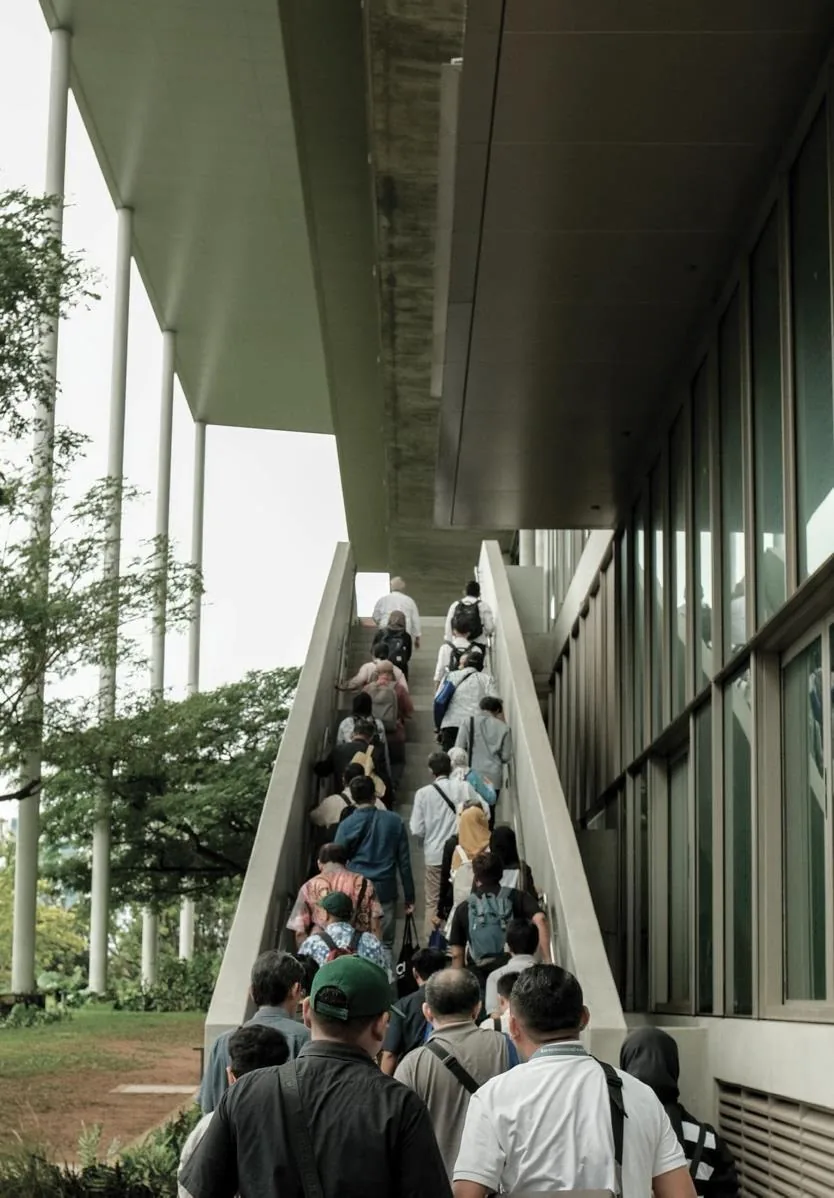
Three working days of immersive international site visits, preceded by a 2.5-hour online opening lecture. Destinations are selected for direct relevance to the client's sector and asset portfolio.
Each day combines a major site visit, a structured engagement with host counterparts, and a synthesis discussion. Participants observe both excellence in sustainability and excellence in commercial outcomes — two qualities rarely found together. The cohort returns with shared visual and conceptual reference points, and a clear analytical lens for the transformation work that follows.
Destinations, host institutions, and observation themes are selected for each engagement. The pairings below indicate the range — not the menu.
| Sector | Destination | Observation focus |
|---|---|---|
| Fisheries & Cold Chain | Japan · Toyosu, Choshi, Yaizu | Modern fish markets, port operations, circular fisheries economy. |
| Industrial Manufacturing | Singapore or Hong Kong | Net-zero factories, industrial energy, green building integration. |
| Property & Master Developers | Singapore · Hong Kong | Transit-oriented development, vertical density, mixed-use sustainability. |
| Infrastructure & Ports | Japan · Australia | Green port infrastructure, climate-resilient coastal assets. |
| Energy & Utilities | Selected reference markets | Renewable integration, grid modernisation, transition operations. |
Proven delivery
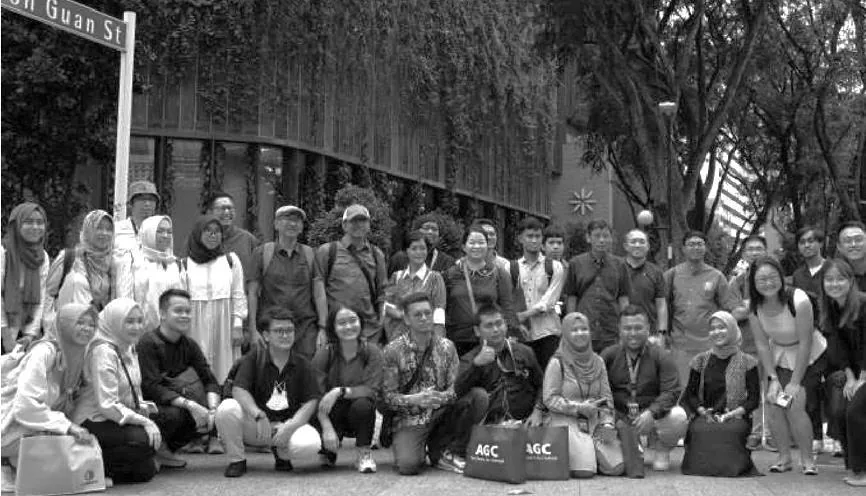
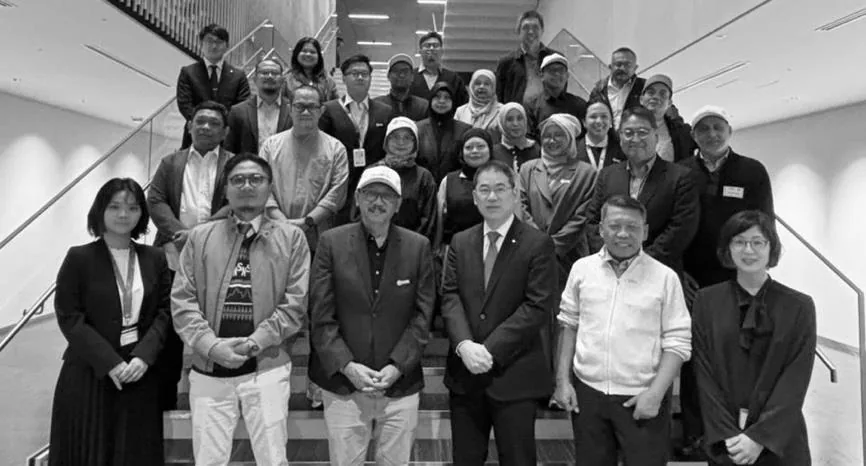
DEX Institute has convened international leadership cohorts since 2018 — the foundation of the methodology that today underpins our bespoke corporate engagements.
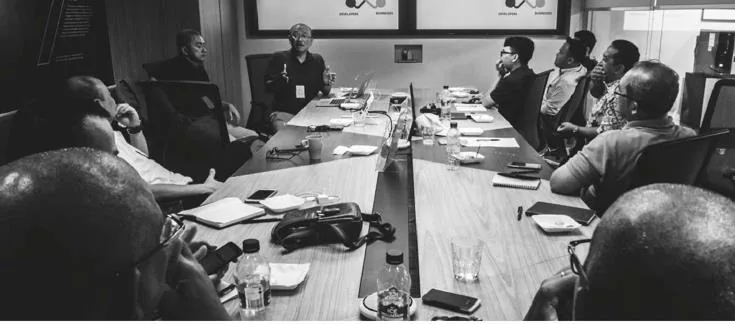
2018 Singapore
Inaugural cohort. Singapore's anti-sprawl strategies and integrated urban planning, including visits to several transit areas and an underground MRT depot then under construction.
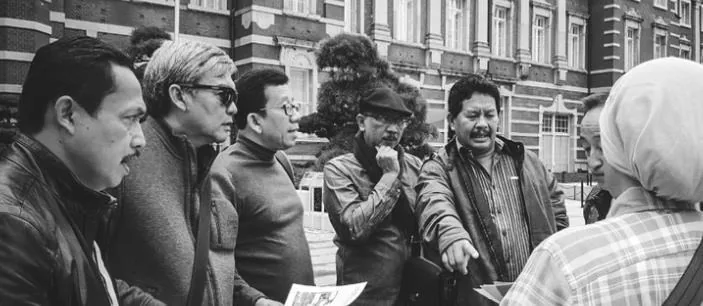
2018 Tokyo & Osaka
With support from the Ministry of ATR/BPN and JICA, the cohort visited underground and above-ground developments for public and commercial use, plus urban redevelopment through land consolidation.
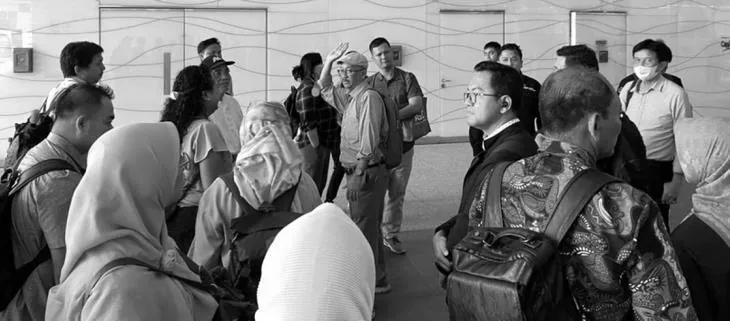
2023 Singapore
In collaboration with GBCI. Visits to transit areas at Dhoby Ghaut, Bras Basah and Stadium, with lectures at the NUS net-zero building and SMU's hybrid cooling system.
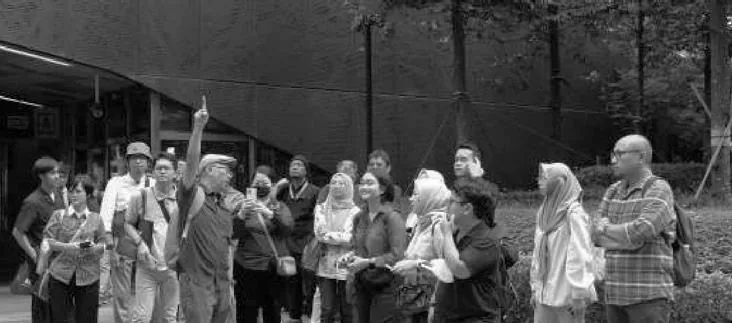
2023 Singapore
In partnership with GBCI, exploring nature as a strategic asset for low-carbon neighbourhoods. Case studies at Bukit Timah Reserve, Oasia Hotel, CapitaSpring and Kampung Admiralty, with lectures at the NUS net-zero building.
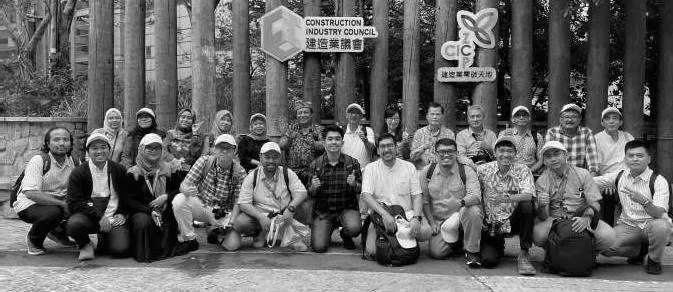
2024 Hong Kong SAR
In collaboration with GBCI. Sustainability within high-density urban transit: Union Square Kowloon — the super-transit structure where the ICC Tower, the city's tallest green building, stands — the Xiqu Centre, and Zero Carbon Park.
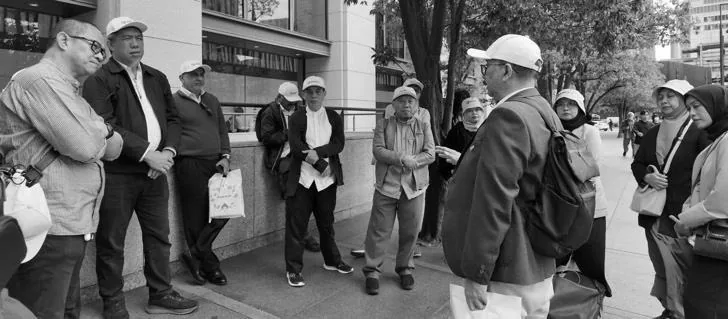
2026 Tokyo
As GBCI facilitator specialising in green building systems and urban redevelopment, DEX helped leaders master land consolidation — a model for large-scale city renewal that works without traditional land acquisition.
What clients receive
Each engagement produces a curated set of materials that the leadership team carries back into the organisation as the foundation for subsequent transformation work.
01
Custom-prepared materials covering each module, tailored to the client's sector and assets.
02
Structured templates for asset assessment, ESG mapping, and green finance pipeline thinking.
03
A consolidated map of priority assets, transformation interventions, and capital pathways.
04
A concise synthesis document capturing key insights and initial recommendations.
05
Site descriptions, observation framework, and small-group themes for the Phase 2 leadership course.
06
A structured action framework guiding the leadership team through the first quarter after the programme.
Strategic focus
ESG defines what is measured. Green Finance prices the result. The programme converges here — the most actionable strategic conversation, and the most enduring.
The measurement layer
The capital layer
Verified data unlocks specific financing terms. Every module of the programme builds toward this hinge.
How to engage
Each engagement begins with a calibration conversation. From there, scope, schedule, and faculty are tuned to the client's context before contracting and delivery.
i
An initial discussion with DEX leadership to understand the organisation's sector, assets, and transformation horizon.
ii
A tailored brief covering Phase 1 module scope, Phase 2 destination, faculty lineup, and proposed schedule.
iii
Contracting, cohort confirmation, and onboarding. External experts secured against agreed dates.
iv
In-house workshop at the client's premises, followed by the international leadership course one to two weeks later.
Every engagement starts with a calibration conversation about your sector, your assets, and your transformation horizon.